Monday, September 4, 2017
A HOST OF CHARACTERS
I have written on this subject before but it comes up time and time again in discussions with authors. In response to an author who asked if a scenario was appropriate for her FBI agent protagonist, I pointed out the fiction market is oversaturated with FBI characters. Our discussion took place on a Yahoo discussion board and a couple of FBI agents chimed in. They agree, noting that most of the those characters are not working cases that fall within the responsibility of the FBI. The FBI does not work murder cases, except in very limited circumstances such as on federal property. They do not take over cases from the locals. 99.9% of all murders are investigated by local police and sheriff's departments. I like to see characters outside the same old, same old big city detectives and FBI agents--game wardens, park rangers, the retired cop who becomes the sole detective in what he thought was a 'sleepy' sheriff's office, Border Patrol, etc. There are so many law enforcement agencies to choose from, even Navajo Livestock Rangers!

Thursday, June 29, 2017
THE FBI, SWAT, AND CSI
If
your novel features law enforcement officers, consider the size and
responsibilities of their organization. The size will determine the
capabilities of the agency and its officers. Ninety percent of the law
enforcement agencies in the U.S. have less than 25 officers. A department with
less than 100 officers probably does not have full-time "CSI"
technicians nor a full-time SWAT team. Those are usually secondary duties for
patrol officers and detectives in addition to their primary responsibilities.
Most detectives are going to process their own crime scenes--"CSI"
units only exist in large departments and extremely well financed ones.
A
common mistake in mysteries and suspense novels is using the FBI to investigate
the murder. The FBI does not routinely investigate murders--the rare exception
would be a violation of federal law. The FBI does not have the authority to
take over murder cases. Not even serial killings. 99.9% of all U.S. murders are
investigated by local police. In 40+ years in law enforcement, maybe a half
dozen of the thousands of cases and arrests I participated in also involved the
FBI. It happens more often in fiction
than real life. The FBI has its own
federal investigations to worry about.
Now,
if you need a character to pair up with a local detective, use a county
sheriff's deputy, state police investigator, or whatever state enforcement
agency exists in your state. While that's also rare, it occurs occasionally. The
odds your local cop will partner up with a fed is slim to none. It just doesn't
happen.
Wednesday, November 23, 2016
MORE THAN JUST CONSULTING
While most writers seek us out for help with matters involving the police, crime, and criminal procedure, we also perform copy editing or line editing on manuscripts.
We give you "two for one" by ensuring your details on crime, criminals, the police, and the criminal justice system are accurate and plausible while providing editing of your manuscript. We work hard so our clients are always satisfied with both aspects of our efforts.
Copyediting addresses technical flaws. Some call it an incredibly high-end proofread. As part of copyediting, we check:
grammar
punctuation
spelling
word usage
awkward phrases
missing words
typos
repetition
story details
tight writing
detecting ambiguous statements
checking internal consistency
punctuation
spelling
word usage
awkward phrases
missing words
typos
repetition
story details
tight writing
detecting ambiguous statements
checking internal consistency
Internal consistency means your plot, setting, and character traits do not change. For example, if you write on page 26 that Tim has a blue truck and then on page 32, the truck is now red, that's a lack of consistency. You might be surprised how often we see mistakes like that.
Line editing involves the manuscript's content and writing style on the sentence and paragraph level. It examines how you communicate the story--how you use language. Some of the issues we look for include:
confusing scenes
opportunities for tighter language
content that does not flow
unclear meaning
opportunities to omit needless words
awkward writing
We give you "two for one" by ensuring your details on crime, criminals, the police, and the criminal justice system are accurate and plausible while providing editing of your manuscript. We work hard so our clients are always satisfied with both aspects of our efforts.
.
Wednesday, April 20, 2016
USING ONLINE INTERVIEWS TO PROMOTE YOUR WORK
An online audio interview is one way to publicize your book. Our client Susannah Sandlin describes her latest here including how we helped her with the law enforcement aspects of the book.

http://www.blogtalkradio.com/circle-of-seven/2016/04/20/book-lights-with-debra-parmley-presents-susannah-sandlin
http://www.blogtalkradio.com/circle-of-seven/2016/04/20/book-lights-with-debra-parmley-presents-susannah-sandlin
Saturday, January 23, 2016
TASERS and other ECDS
I've written about TASERS and similar weapons in the past but after reading a suspense novel this week, it's time to mention them again.
The book was great. Well-developed characters with a plausible yet suspenseful story line. The police procedures were portrayed accurately, but for one thing. The writer made the same mistake I have seen in three other novels in the last two years. The hero is zapped with a "stun gun" which immediately knocks him unconscious.
Does't happen, folks. Stun guns, or more properly, "electronic control devices" (ECDs) are extremely painful but they don't bring on a loss of consciousness. And once the current stops, there is no further pain or discomfort. When the current stops, the effect stops.
An ECD causes all loss of muscle control, so the person usually falls to the floor. Then, during the moments when the person is still disoriented and in fear of another 'zap,' he can be contained, handcuffed, or whatever.
Less-lethal weapons like the TASER are frequently used by law enforcement agencies to overcome suspect resistance. They have saved the lives of officers and suspects alike. Agencies equipped with TASERs have seen a significant decrease in officer and suspect injuries. I often convinced a combative suspect to surrender merely by shining the TASER’s red laser aiming dot on his chest. TASER (all caps) is a trademarked brand name of a specific electronic control device. The acronym stands for Thomas A. Swift Electric Rifle. While it is the best known ECD, there are other brands. Some models are marketed only to law enforcement; others are available to civilians. The term "stun gun" is not used in law enforcement to describe these weapons.
If you need to knock your character unconscious, perhaps consider having his head hit something hard when he's targeted with a "stun gun."
Wednesday, September 9, 2015
PRAISE FOR WRITECRIMERIGHT.COM
We have to share the kind words of one of our clients. Suzanne Johnson has started a new suspense series featuring Louisiana game wardens. If you want a change from suspense novels starring big city cops or FBI agents, this may be the book for you. Here's what she has to say after WriteCrimeRight analyzed her manuscript:
"I can't think of any area as difficult for novelists to 'get right' as the complexities of law enforcement. Thanks to WriteCrimeRight and Wesley Harris's consulting work on my upcoming series, I feel confident that everything from the weapons used to the investigative procedures and officers' reactions feel authentic. I can't recommend his work highly enough."
--Suzanne Johnson/Susannah Sandlin, award-winning author for Tor Books and Montlake Romance and author of the upcoming Wildlife Agents series from Montlake.
We will post the name and availability of the book once it is released. Thanks, Suzanne, and good luck with the new series.
Monday, March 9, 2015
WE ANSWER QUESTIONS--A FALSE CONVICTION?
Here's a brief exchange with a writer via social media that illustrates how we can help with a crime story. This writer's dilemma dealt with understanding how procedure would work in an unusual scenario:
This was a brief and public conversation through social media. When you ask us to help with your work in progress, you get detailed personal and confidential attention. Contact us at campruston@gmail.com.
Q: I have a scenario
I want to run by someone knowledgeable in criminal law or law enforcement. It
has to do with what is done legally when someone is convicted of a murder and
serving time but someone else steps forward and confesses to doing the deed. Is
there a hearing? Is the new party immediately arrested? Is he or she arrested
only if there's enough evidence to arrest? (False confessions do take place.)
What if the crime is so old that it lacks sufficient evidence? On TV, of
course, you typically see the new party being led away in handcuffs as if it's
a done deal.
WriteCrimeRight: The first step would be for the police to
question this person to determine if the confession is legitimate. A new police
investigation would occur, perhaps a very lengthy one. A confession alone is not enough to convict
someone of murder so the police would look for corroborating evidence. In
consultation with the prosecutor's office that handled the original case, they
would determine if there's enough to charge the person.
The guy in prison is a different matter entirely. The
prosecutor would either ask a judge to overturn the conviction if it was
believed to be in error, or they may conclude both were involved. If the guy is
completely innocent, it would be a rather lengthy process to release him. But being completely without guilt is a
rather long shot as the standard of proof for a murder conviction and hurtling
the subsequent appeals is very high.
Q: What would the
evidence need to be to completely overturn a murder conviction? And what
wouldn't be good enough?
This was a brief and public conversation through social media. When you ask us to help with your work in progress, you get detailed personal and confidential attention. Contact us at campruston@gmail.com.
Saturday, September 27, 2014
ABCs of AMMO, BULLETS and CARTRIDGES
Firearms
terminology confuses many writers. Sue
Grafton, a superstar in the world of crime fiction, was blasted by many readers
when she equipped her private eye Kinsey Millhone with a measly .32 caliber
pistol when any self-respecting ex-cop would carry a .357, 9mm, .40
cal—anything but never a .32.
Confusing “revolver” and “pistol” is a classic mistake. Pistol usually refers to any handgun not a
revolver, primarily large capacity, semi-automatic handguns. Having a revolver eject spent shells onto the
ground will prompt snorts of derision from educated readers.
The
revolver vs. pistol issue was covered in an earlier blog post, so I’ll move on
to some terms related to ammunition that could be used in your story:
Caliber
– the dimension of the bullet. Sometimes measured in hundredths of an inch like
.38 caliber, sometimes in millimeters (9mm).
Cartridge
– complete unfired ammunition consisting of a cartridge case, powder charge,
bullet and primer. This is what you load in your firearm.
 |
| common pistol cartridges |
Bullet
– the projectile attached to the front of a cartridge. This is what is fired from your firearm.
 |
| The bullet is the projectile that is fired at the target. The exterior is often a copper or brass jacket covering lead and other metals. |
Bullet
jacket – the copper or brass outer skin of a jacketed bullet. Sometimes
portions of the jacket will fragment off when the bullet strikes an object.
Case - the portion of a cartridge containing the gunpowder. A pistol ejects the case when it is fired. For a revolver, you must physically remove the fired cases from the cylinder to reload. Cases are informally referred to as "hulls" or "brass."
Slug –
while sometimes used to refer to a bullet, a slug is a lead projectile fired
from a shotgun. Some shotgun shells contain numerous pellets. A slug shell
contains only the large lead projectile.
 |
| comparison of 00 shotgun shell with slug |
“00-buck”
shell – shotgun shell referred to as “double ought buck” or “double ought
buckshot.” The shotgun shell most commonly used by law enforcement. The shell
contains nine .32 caliber lead pellets.
Wad or
wadding – plastic, paper, or fiber disk that separates the powder from the shot
in a shotgun shell. It is propelled out of the gun along with the pellets,
sometimes into the target. The wad only travels a few yards, so drawing a line
from the victim back to the wad and extending it will indicate the direction
from which the shot was fired.
 |
| stippling around entry wound |
Stippling
– abrasions or ‘tattooing’ produced on the skin by gunpowder when the gun is
fired from a short distance.
GSR –
a general term for gunshot (gunpowder) residue. A test for residue is
abbreviated GSR.
Powder
particles – sometimes visible, unburned gunpowder can be found on the clothing
or body of a wounded person.
Magazine
– a device for holding cartridges which is inserted into the grip of a
pistol. It is NOT a “clip.”
 |
| This is a magazine, not a 'clip.' |
Wednesday, September 17, 2014
MISSING PERSONS
Thousands of people go missing in the United States each year. Some are voluntary disappearances, such as runaways. Not just teenagers, but adults who want to flee their former lives. A few are actual abductions. There's always been a myth that a person has to be missing for 24 hours before the police can act. Not true. It can be five minutes if the circumstances warrant it.
I've taken missing person reports from all manner of people--spouses, parents, neighbors, friends. Generally, missing person cases investigated by the police fall into one of these categories:
1. runaway teens and missing children
2. people who may be victims of foul play
3. those who have a condition that places them in danger--Alzheimer's, mental illness, medical condition, etc.
In these situations, the person can be entered into the National Crime Information Center (NCIC) system as a missing person. Should a police officer encounter the person and run a check, a missing person "hit" would come back with information to contact the investigating agency.
A case of a missing adult in which no foul play is suspected and no extenuating condition exists may not be a high priority for the police. Disappearing to begin a new life is not a crime.
In the case of a missing person who was traveling, the report is filed at the jurisdiction the person is missing from, not the destination. The agency receiving the report would probably contact the police at the destination for assistance.

I've taken missing person reports from all manner of people--spouses, parents, neighbors, friends. Generally, missing person cases investigated by the police fall into one of these categories:
1. runaway teens and missing children
2. people who may be victims of foul play
3. those who have a condition that places them in danger--Alzheimer's, mental illness, medical condition, etc.
In these situations, the person can be entered into the National Crime Information Center (NCIC) system as a missing person. Should a police officer encounter the person and run a check, a missing person "hit" would come back with information to contact the investigating agency.
A case of a missing adult in which no foul play is suspected and no extenuating condition exists may not be a high priority for the police. Disappearing to begin a new life is not a crime.
In the case of a missing person who was traveling, the report is filed at the jurisdiction the person is missing from, not the destination. The agency receiving the report would probably contact the police at the destination for assistance.
For "missing" children, the circumstances are different in every case. Police agencies have learned from botched investigations that you jump on missing children cases fast and with every resource available. The priority may be marshaling search and rescue personnel to initiate a search of the immediate area, broadcasting AMBER alerts, notifying the media, etc. Supervisory personnel decide what resources shall be called, whether other agencies, the FBI, a CART team (see link) are notified.
This link includes a checklist of what law enforcement does when a child is missing:
http://www.missingkids.com/en_US/publications/NC74.pdf
Thursday, June 5, 2014
"DON'T TASE ME, BRO."
“Don’t tase me, bro.”
That plea was made famous by a protesting
college student caught on video during an arrest. It shows how familiar the
American public is with these relatively new weapons. The student in question even registered the
phrase as a trademark to promote a book and line of t-shirts.
We get many questions about “stun
guns” or “TASERS.” The use of these
weapons can provide a different twist to a story. But it’s confusing technology—I
just read a novel by one of my favorite authors where a “stun gun” was used to render
the victim unconscious. Doesn’t happen, folks. These devices are very painful
but they do not shock you into unconsciousness.
Do your research.

Less-lethal weapons like the
TASER are frequently used by law enforcement agencies to overcome suspect
resistance. They have saved the lives of officers and suspects alike. Agencies
equipped with TASERs have seen a significant decrease in officer and suspect
injuries. I often convinced a combative suspect to surrender merely by shining
the TASER’s red laser aiming dot on his chest.
TASER
(all caps) is a trademarked brand name of a specific electronic control device
(ECD). The acronym stands for Thomas A.
Swift Electric Rifle. While it is the
best known
Thursday, May 22, 2014
WELCOME TO MODERN POLICING, FBI
Thirty-four years ago in 1980, when I moved from patrol to criminal investigations in my hometown's police department, the unit had already been tape recording interrogations and witness statements for years. We knew nothing swayed a jury more than hearing a suspect's confession come from his own mouth. I didn't realize how progressive our policy was until I moved to metro Atlanta in 1989 where NO agencies recorded statements. The typical procedure involved a detective writing out a statement or confession by "transcribing," in essence, paraphrasing, the suspect's words. The suspect would then sign it, often without being able to comprehend what had been written.
I adopted a mandatory recording policy at my new agency, first for tape recording, followed later by videotaping. My agency was the first in metropolitan Atlanta--an area with dozens of law enforcement agencies. Prosecutors of all the local counties soon made everyone else follow our example. Today I learned the FBI didn't start recording interviews until THIS MONTH. In fact, the written policy was that interviews and interrogations were NOT to be recorded, a rule that left skeptical juries wanting more. The new procedure will be to record all interviews until there is a compelling reason not to make a record. While the FBI has established the benchmark for many investigative procedures, they were way behind on this one.
Welcome to modern police work, FBI.
I adopted a mandatory recording policy at my new agency, first for tape recording, followed later by videotaping. My agency was the first in metropolitan Atlanta--an area with dozens of law enforcement agencies. Prosecutors of all the local counties soon made everyone else follow our example. Today I learned the FBI didn't start recording interviews until THIS MONTH. In fact, the written policy was that interviews and interrogations were NOT to be recorded, a rule that left skeptical juries wanting more. The new procedure will be to record all interviews until there is a compelling reason not to make a record. While the FBI has established the benchmark for many investigative procedures, they were way behind on this one.
Welcome to modern police work, FBI.
Thursday, May 1, 2014
WHAT DO EDITORS DO?
The editing process can be confusing with so many editing services available before and after a manuscript is accepted. When writecrimeright.com reviews a manuscript, we do more than analyze the legal procedures. We also provide "copy editing."
Three levels of freelance editing are available to authors seeking to improve their manuscripts before seeking a contract:
Proofreading: A proofreader provides a check of the document for minor mistakes in spelling, punctuation, spacing, and so on.
Copy editing: Our definition of copy editing includes checking:
grammar
punctuation
spelling
word usage
awkward phrases
pronoun agreement
missing words
typos
repetition
inconsistencies
story details
tight writing
manuscript formatting
Line Editing or Substantive Editing: In addition to performing the tasks of copy editing, the line editor may initiate significant changes to improve the narrative. While copy editing pertains to "mechanics," line editing focuses on "story." The editor enhances the quality of the writing, removes unnecessary repetition and plot flaws, and restructures sentences and paragraphs for smoother flow. The line editor knows the difference between active and passive prose, turning dull writing into something more engaging.
When writecrimeright.com reviews your manuscript, you get "two for one"--an extensive analysis of everything related to police work and criminal procedure as well as word-by-word, line-by-line copy editing. The result: a story your readers will find plausible and realistic and a manuscript attractive to publishers.
Sunday, April 6, 2014
IT TAKES ONE TO KNOW ONE
One way to learn to write crime drama realistically is read novels by those who have been there. Everyone has heard of Joseph Wambaugh, the former Los Angeles PD officer known as the "Grand Master of Police Novels." Wambaugh has sold millions of fiction and non-fiction books featuring police work.
For those who are turned off by Wambaugh's rather gritty, often profane novels, here's some of my favorite cops-turned-novelists who provide a Christian world view while staying true to realistic police procedure and investigative techniques.

 A former Long Beach, California,
police officer of twenty-two years, Janice Cantore worked a variety of
assignments, including patrol, administration, juvenile investigations, and
training. A few years ago, she moved to southern Oregon, where Janice writes suspense novels designed to keep readers
engrossed and inspired. I loved her Pacific Coast Justice series.
A former Long Beach, California,
police officer of twenty-two years, Janice Cantore worked a variety of
assignments, including patrol, administration, juvenile investigations, and
training. A few years ago, she moved to southern Oregon, where Janice writes suspense novels designed to keep readers
engrossed and inspired. I loved her Pacific Coast Justice series.
 Mark Mynheir is the author of the
Ray Quinn mysteries. Mynheir served 25 years as a Florida officer, including stints as a detective, SWAT team member, and undercover narcotics agent.
Mark Mynheir is the author of the
Ray Quinn mysteries. Mynheir served 25 years as a Florida officer, including stints as a detective, SWAT team member, and undercover narcotics agent.
 While I titled this post "It Takes One to Know One," that's not completely true. Many writers, through extensive research and consultations with real cops, have written masterpieces that portray police officers realistically. When I read J. Mark Bertrand's Back on Murder, I was convinced the writer was a veteran officer. I knew he had to be an experienced Houston detective. Not so. Bertrand has never worn a badge but his Roland March series is among the most realistic detective stories I have ever read.
Some day I hope to complete my own novel and join this fine group of former officers who traded in their pistols for pens. For now, I carry both.
For those who are turned off by Wambaugh's rather gritty, often profane novels, here's some of my favorite cops-turned-novelists who provide a Christian world view while staying true to realistic police procedure and investigative techniques.


 A former Long Beach, California,
police officer of twenty-two years, Janice Cantore worked a variety of
assignments, including patrol, administration, juvenile investigations, and
training. A few years ago, she moved to southern Oregon, where Janice writes suspense novels designed to keep readers
engrossed and inspired. I loved her Pacific Coast Justice series.
A former Long Beach, California,
police officer of twenty-two years, Janice Cantore worked a variety of
assignments, including patrol, administration, juvenile investigations, and
training. A few years ago, she moved to southern Oregon, where Janice writes suspense novels designed to keep readers
engrossed and inspired. I loved her Pacific Coast Justice series.
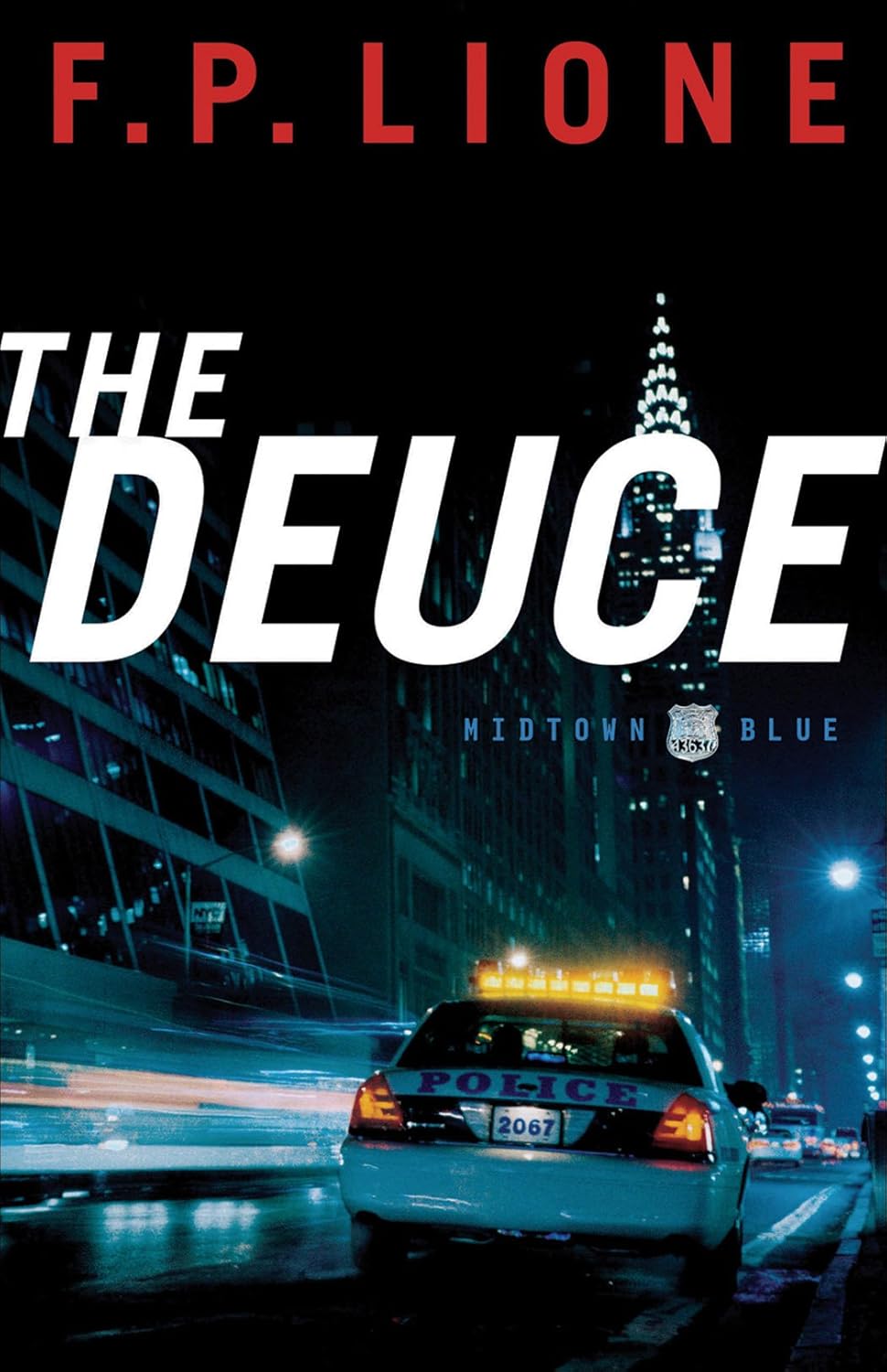
F.P. Lione is actually two people
— the husband-wife team of Frank and Pam Lione. They are both
Italian-American and the offspring of New York PD detectives. Frank Lione is a veteran
of the NYPD, and Pam a former medical sonographer who now stays home with their two sons. They divide their time between New
York City and Broadheadville, Pennsylvania, in the Poconos.
 Mark Mynheir is the author of the
Ray Quinn mysteries. Mynheir served 25 years as a Florida officer, including stints as a detective, SWAT team member, and undercover narcotics agent.
Mark Mynheir is the author of the
Ray Quinn mysteries. Mynheir served 25 years as a Florida officer, including stints as a detective, SWAT team member, and undercover narcotics agent. 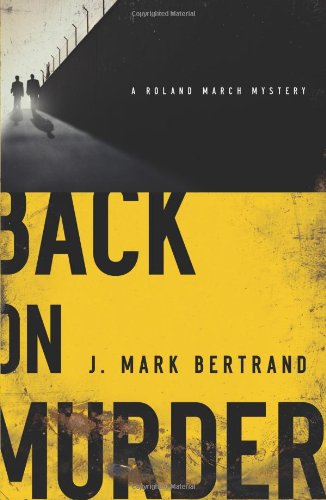 While I titled this post "It Takes One to Know One," that's not completely true. Many writers, through extensive research and consultations with real cops, have written masterpieces that portray police officers realistically. When I read J. Mark Bertrand's Back on Murder, I was convinced the writer was a veteran officer. I knew he had to be an experienced Houston detective. Not so. Bertrand has never worn a badge but his Roland March series is among the most realistic detective stories I have ever read.
Some day I hope to complete my own novel and join this fine group of former officers who traded in their pistols for pens. For now, I carry both.
Friday, March 21, 2014
SOME QUICK DOs AND DON'Ts FOR CRIME WRITERS
Here's some quick tips for adding realism to your writing:
1. Avoid the use of "policeman," "patrolman," "fireman," etc. The number of females in public safety professions has increased significantly in the last twenty years.
2. Don't assume your officers have partners. Virtually all police work is performed by officers assigned individually to one-officer patrol cars. There are exceptions, mostly in larger cities on the east and west coasts. Pairing officers or detectives as partners certainly increases opportunities for interaction and conversation but keep in mind that a formal, permanent partnership is unlikely in most police agencies.
3. Know your weapons. If your story includes firearms, know your subject before you make stupid mistakes like having a revolver eject empty shells onto the ground. Or inserting a "clip" into a pistol (it's called a "magazine.")
4. Check your terminology. There's a difference between burglary, robbery, and theft. Is drunk driving called DWI or DUI in the state where your story is set?
5. Tread carefully in the morass of legal procedure. Lots of room for mistakes here. For example, there's no requirement that officers give a suspect the Miranda warning at the time of arrest. It's usually done just prior to an interrogation. The convolutions in navigating the criminal justice system is dizzying even for those in law enforcement. Although you may want your bad guy arrested, tried, and convicted inside a week, he will attend a dozen or more court hearings between arrest and sentencing over the course of months or even years.
6. Give your police officers a life outside of work. We've read too many novels where officers seem to work 24/7 with no mention of family, leisure activities, or personal interests. Even diehard cops have to sleep, feed the dog, go to church, and check on the kids.
7. Avoid stereotypes. Not all police officers are alike. Beware giving your female MC the standard characterization of having to prove herself to her male counterparts, as well as to the world in general. It's a worn out story line and most police departments are way past that.
1. Avoid the use of "policeman," "patrolman," "fireman," etc. The number of females in public safety professions has increased significantly in the last twenty years.
2. Don't assume your officers have partners. Virtually all police work is performed by officers assigned individually to one-officer patrol cars. There are exceptions, mostly in larger cities on the east and west coasts. Pairing officers or detectives as partners certainly increases opportunities for interaction and conversation but keep in mind that a formal, permanent partnership is unlikely in most police agencies.
3. Know your weapons. If your story includes firearms, know your subject before you make stupid mistakes like having a revolver eject empty shells onto the ground. Or inserting a "clip" into a pistol (it's called a "magazine.")
4. Check your terminology. There's a difference between burglary, robbery, and theft. Is drunk driving called DWI or DUI in the state where your story is set?
5. Tread carefully in the morass of legal procedure. Lots of room for mistakes here. For example, there's no requirement that officers give a suspect the Miranda warning at the time of arrest. It's usually done just prior to an interrogation. The convolutions in navigating the criminal justice system is dizzying even for those in law enforcement. Although you may want your bad guy arrested, tried, and convicted inside a week, he will attend a dozen or more court hearings between arrest and sentencing over the course of months or even years.
6. Give your police officers a life outside of work. We've read too many novels where officers seem to work 24/7 with no mention of family, leisure activities, or personal interests. Even diehard cops have to sleep, feed the dog, go to church, and check on the kids.
7. Avoid stereotypes. Not all police officers are alike. Beware giving your female MC the standard characterization of having to prove herself to her male counterparts, as well as to the world in general. It's a worn out story line and most police departments are way past that.
Great writing can overcome lapses in correct procedure and terminology without losing credibility when most of the story rings of authenticity. Breaking the rules doesn't take away from a story's authenticity when it is done sparingly and in a believable manner.
Saturday, January 25, 2014
IS HE LYING?
An
asset for any police officer is the ability to know when someone is lying. Sometimes lies can be revealed when a suspect
contradicts himself or provides implausible explanations. But one of the best ways to detect lies are nonverbal
cues that reveal the stress accompanying deception. Many aspects of our bodily functions and
other physical behaviors are beyond our control. We cannot keep out
bodies from perspiring or slow down our pulse rate during physical exertion or
moments of stress. It is because most suspects cannot control these actions
that these cues are such effective indicators of deception.
The
physical behavioral indicators described below are just some of many. They
are highly effective in helping officers detect criminal activity and
protect themselves from danger. They go beyond the simple nervousness one
might experience in a 'normal' encounter with an officer, such as a traffic
violation.
NO-LOOK
MANEUVER: This signal occurs before the encounter ever takes place.
At an intersection, for example, a motorist absolutely refuses to look towards
the officer. An offender who has something to hide will resort to
exaggerated effort to avoid direct eye contact with a police officer in a
chance encounter.
RESTLESSNESS:
A high level of stress often causes a person to be very fidgety, shifting
positions frequently, pacing, crossing and uncrossing arms. A stressed
person may also try to move away, attempting to increase their comfort zone in
order to reduce the anxiety.
FALSE
FATIGUE: Signs of fatigue may actually be efforts by the body to relieve
stress. Frequent yawning and sighing are good stress relievers in these
circumstances.
Wednesday, January 22, 2014
"I've been robbed..."
"I've been robbed."
I started my career as a police dispatcher, answering emergency phone calls and routing officers to the scene. When someone called to report a "robbery," my heart would skip a beat. Robberies are violent. Dangerous. They usually involve firearms. The police response is all-out.
Everyone knows the common definition of theft or
larceny--taking something belonging to another--but it also includes any type
of fraud, misrepresentation or deception. One of the most interesting
cases I worked as a young investigator many years ago involved a man selling
TVs out of the trunk of his car in shopping center parking lots. He would
motion people over to his car with a story that he had a TV to sell--it was not
the one he wanted but the store wouldn't take it back, so he was trying to sell
it in order to buy the one he wanted. He would partially open a box to
show a TV wrapped in plastic and packed in Styrofoam. People would buy
the TVs and the guy would take off with the money.
When the buyer had a chance to unwrap it, he found a very old, worthless black & white TV that had been packaged to make it look new. We finally caught up with him and charged him with theft. He had defrauded the victims, which under our state law was a theft.
The important element to remember about burglary is that it requires an "unauthorized entry" into the premises. The suspect has to unlawfully enter the business, home or other structure. It is not necessary to "break in," only that the entry is without permission. If I walk into Wal-Mart during business hours, I can't commit a burglary there because I did not make an unauthorized entry.
So the two essential elements of a burglary are:
(1) an unauthorized entry
(2) the intent to commit a theft or felony inside
It is not necessary to commit the theft or felony to have a burglary, only have the intent to do so.
A robbery is a theft in which the perpetrator uses force or the threat of force to take something in the immediate control of the victim. If I snatch your wallet out of your hand, that is a robbery. If I pretend to have a gun and demand all your money, that's a robbery.
Usually with felony charges like burglary and robbery, we don't add on misdemeanor charges. It would just mean more paperwork and the misdemeanors will most likely be dropped by the D.A. anyway. Many misdemeanors are "lesser and included crimes" to felonies, which means the defendant could not be found guilty of both. For example, a suspect robs a convenience store of $50. He cannot be convicted of theft and robbery because the theft is an essential element of the robbery charge. It would be punishing twice for the same behavior. The same holds true for breaking out a window to commit a burglary. Only the burglary charge would be pursued, not a misdemeanor damage to property.
When the buyer had a chance to unwrap it, he found a very old, worthless black & white TV that had been packaged to make it look new. We finally caught up with him and charged him with theft. He had defrauded the victims, which under our state law was a theft.
The important element to remember about burglary is that it requires an "unauthorized entry" into the premises. The suspect has to unlawfully enter the business, home or other structure. It is not necessary to "break in," only that the entry is without permission. If I walk into Wal-Mart during business hours, I can't commit a burglary there because I did not make an unauthorized entry.
So the two essential elements of a burglary are:
(1) an unauthorized entry
(2) the intent to commit a theft or felony inside
It is not necessary to commit the theft or felony to have a burglary, only have the intent to do so.
A robbery is a theft in which the perpetrator uses force or the threat of force to take something in the immediate control of the victim. If I snatch your wallet out of your hand, that is a robbery. If I pretend to have a gun and demand all your money, that's a robbery.
Usually with felony charges like burglary and robbery, we don't add on misdemeanor charges. It would just mean more paperwork and the misdemeanors will most likely be dropped by the D.A. anyway. Many misdemeanors are "lesser and included crimes" to felonies, which means the defendant could not be found guilty of both. For example, a suspect robs a convenience store of $50. He cannot be convicted of theft and robbery because the theft is an essential element of the robbery charge. It would be punishing twice for the same behavior. The same holds true for breaking out a window to commit a burglary. Only the burglary charge would be pursued, not a misdemeanor damage to property.
Thursday, January 9, 2014
BOLSTERING YOUR RESEARCH
Award-winning author Jocelyn Green inspires faith and
courage in her readers through both fiction and nonfiction. Check out
here seven tips for bolstering your research, including how WriteCrimeRight.com
helped her! http://www.jocelyngreen.com/2014/01/09/7-ways-to-bolster-your-historical-fiction-research/

Tuesday, January 7, 2014
WRITING YOUR CHASE SCENES
During
my time on patrol, I participated in my share of car chases—or “vehicle
pursuits” as we called them in official reports. A typical report contained a meticulous
recitation of every street traveled, every turn negotiated, every stop sign and
red light disregarded. Most often, the
report failed to portray the danger, the urgency, or the chaos of the
chase. Although we were always directed
to “paint a picture in words” for the prosecutor and the courts, our use of legalese—sophisticated
coptalk—usually left the image rather cloudy.
You weren't supposed to write a thrilling novel but a “just the facts”
narrative.

You
want the readers of your novel to visualize your chase clearly. Before you write, it may be helpful to
diagram your chase using one of the many online navigational aids available
such as MapQuest and Google Earth. Following a map lets you establish the
twists and turns of a car chase realistically, even down to which street are
one-ways, which have media strips, and so forth. If your setting is a fictional place, you can
select a locale
Saturday, December 7, 2013
WHY DIDN'T THE OFFICER JUST WOUND HIM?
I hear that nearly every time a law enforcement officer has to shoot someone in an armed confrontation. Why couldn't the cop shoot him in the arm or the leg? Why did he have to kill the guy? they ask.
That the question is even asked shows a misconception of the use of deadly force by the police. Pulling the trigger is such
a grave undertaking that most officers go their entire careers without doing
it. In 36 years on the job, I've done it once--shooting at the tire of an armed robber who ran over one of our officers. I missed. Police officers are not trained to "shoot to kill" nor to "shoot to wound." We shoot to stop the
threat, a threat we believe will imminently result in the loss of life or
serious bodily injury if not stopped.
 |
| Evidence of an rampaging attack that killed three officers and one civilian and wounded three other officers. |
There is no
place on the body that a gunshot does not have the potential of causing
immediate death. I've seen guys shot in the leg bleed out and die in less
than a minute. I recall a South Carolina state trooper who was shot on a traffic stop. The bullet hit him in
Tuesday, December 3, 2013
ANOTHER SATISFIED CLIENT!
Read what one of our recent clients had to say about our critiquing service. We analyzed Danielle's mystery novel for accuracy in police procedures and realistic 'copspeak' as well as performing some light editing. We wish her the best:
I recently had the pleasure of working with Wesley Harris on my first mystery novel, The Protector, which will be published in 2014. Wes assisted me with proper police procedure and investigation. He made suggestions on how to fix my mistakes. That’s exactly what I needed and wanted! My book is more accurate because of his help. I feel more confident about what my detectives and uniformed officers are doing and saying. Wes explained legal terms often used by law enforcement, so that I used them correctly. I look forward to working with him on my future novels.
I recently had the pleasure of working with Wesley Harris on my first mystery novel, The Protector, which will be published in 2014. Wes assisted me with proper police procedure and investigation. He made suggestions on how to fix my mistakes. That’s exactly what I needed and wanted! My book is more accurate because of his help. I feel more confident about what my detectives and uniformed officers are doing and saying. Wes explained legal terms often used by law enforcement, so that I used them correctly. I look forward to working with him on my future novels.
--Danielle Davis, first-time novelist
Subscribe to:
Posts (Atom)