Consultant for writers on crime, police, & court procedures.

Thursday, May 1, 2014

WHAT DO EDITORS DO?


The publishing industry has changed significantly since the days when an author could submit a promising but mechanically flawed manuscript and rely on the company's editors to clean it up. Publishers receive so many manuscripts that they need little justification to reject one. While publishers still have editors, an author must submit a reasonably clean manuscript to have a hope of acceptance.

The editing process can be confusing with so many editing services available before and after a manuscript is accepted. When writecrimeright.com reviews a manuscript, we do more than analyze the legal procedures. We also provide "copy editing."   

Three levels of freelance editing are available to authors seeking to improve their manuscripts before seeking a contract:

Proofreading: A proofreader provides a check of the document for minor mistakes in spelling, punctuation, spacing, and so on.

Copy editing: Our definition of copy editing includes checking:

grammar
punctuation
spelling
word usage
awkward phrases
pronoun agreement
missing words
typos
repetition
inconsistencies
story details
tight writing
manuscript formatting

Line Editing or Substantive Editing: In addition to performing the tasks of copy editing, the line editor may initiate significant changes to improve the narrative.  While copy editing pertains to "mechanics," line editing focuses on "story." The editor enhances the quality of the writing, removes unnecessary repetition and plot flaws, and restructures sentences and paragraphs for smoother flow. The line editor knows the difference between active and passive prose, turning dull writing into something more engaging. 

When writecrimeright.com reviews your manuscript, you get "two for one"--an extensive analysis of everything related to police work and criminal procedure as well as word-by-word, line-by-line copy editing. The result: a story your readers will find plausible and realistic and a manuscript attractive to publishers.

Sunday, April 6, 2014

IT TAKES ONE TO KNOW ONE

One way to learn to write crime drama realistically is read novels by those who have been there.  Everyone has heard of Joseph Wambaugh, the former Los Angeles PD officer known as the "Grand Master of Police Novels."  Wambaugh has sold millions of fiction and non-fiction books featuring police work.

For those who are turned off by Wambaugh's rather gritty, often profane novels, here's some of my favorite cops-turned-novelists who provide a Christian world view while staying true to realistic police procedure and investigative techniques. 


A former Long Beach, California, police officer of twenty-two years, Janice Cantore worked a variety of assignments, including patrol, administration, juvenile investigations, and training. A few years ago, she moved to southern Oregon, where Janice writes suspense novels designed to keep readers engrossed and inspired.  I loved her Pacific Coast Justice series.


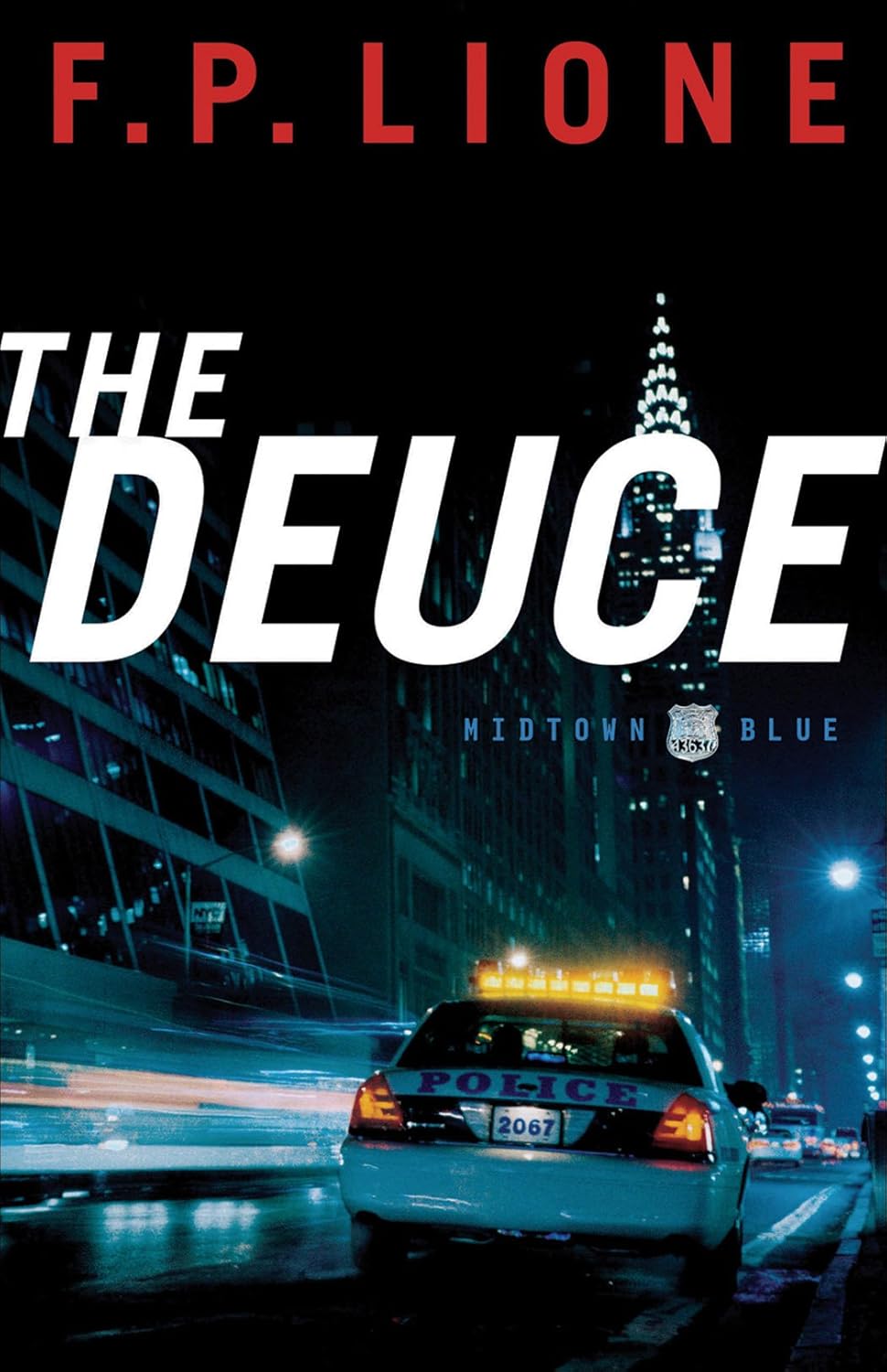
F.P. Lione is actually two people —  the husband-wife team of Frank and Pam Lione. They are both Italian-American and the offspring of New York PD detectives. Frank Lione is a veteran of the NYPD, and Pam a former medical sonographer who now stays home with their two sons. They divide their time between New York City and Broadheadville, Pennsylvania, in the Poconos.

Mark Mynheir is the author of the Ray Quinn mysteries. Mynheir served 25 years as a Florida officer, including stints as a detective, SWAT team member, and undercover narcotics agent. 

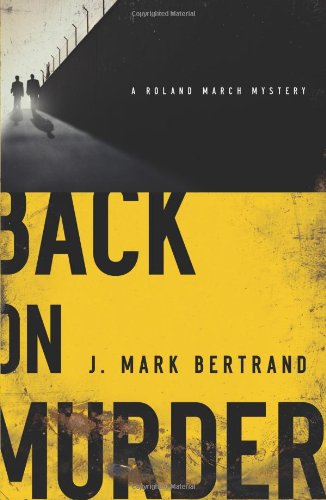
While I titled this post "It Takes One to Know One," that's not completely true. Many writers, through extensive research and consultations with real cops, have written masterpieces that portray police officers realistically.  When I read J. Mark Bertrand's Back on Murder, I was convinced the writer was a veteran officer.  I knew he had to be an experienced Houston detective. Not so. Bertrand has never worn a badge but his Roland March series is among the most realistic detective stories I have ever read.

Some day I hope to complete my own novel and join this fine group of former officers who traded in their pistols for pens.  For now, I carry both.

Friday, March 21, 2014

SOME QUICK DOs AND DON'Ts FOR CRIME WRITERS

Here's some quick tips for adding realism to your writing:


1.  Avoid the use of "policeman," "patrolman," "fireman," etc.  The number of females in public safety professions has increased significantly in the last twenty years.


2.  Don't assume your officers have partners.  Virtually all police work is performed by officers assigned individually to one-officer patrol cars.  There are exceptions, mostly in larger cities on the east and west coasts.  Pairing officers or detectives as partners certainly increases opportunities for interaction and conversation but keep in mind that a formal, permanent partnership is unlikely in most police agencies.


3. Know your weapons. If your story includes firearms, know your subject before you make stupid mistakes like having a revolver eject empty shells onto the ground.  Or inserting a "clip" into a pistol (it's called a "magazine.")

4.  Check your terminology.  There's a difference between burglary, robbery, and theft. Is drunk driving called DWI or DUI in the state where your story is set?

5.  Tread carefully in the morass of legal procedure.  Lots of room for mistakes here.  For example, there's no requirement that officers give a suspect the Miranda warning at the time of arrest.  It's usually done just prior to an interrogation. The convolutions in navigating the criminal justice system is dizzying even for those in law enforcement. Although you may want your bad guy arrested, tried, and convicted inside a week, he will attend a dozen or more court hearings between arrest and sentencing over the course of months or even years.

6.  Give your police officers a life outside of work.  We've read too many novels where officers seem to work 24/7 with no mention of family, leisure activities, or personal interests.  Even diehard cops have to sleep, feed the dog, go to church, and check on the kids.

7.  Avoid stereotypes.  Not all police officers are alike.  Beware giving your female MC the standard characterization of having to prove herself to her male counterparts, as well as to the world in general.  It's a worn out story line and most police departments are way past that.


Great writing can overcome lapses in correct procedure and terminology without losing credibility when most of the story rings of authenticity.  Breaking the rules doesn't take away from a story's authenticity when it is done sparingly and in a believable manner.


Saturday, January 25, 2014

IS HE LYING?


An asset for any police officer is the ability to know when someone is lying.  Sometimes lies can be revealed when a suspect contradicts himself or provides implausible explanations.  But one of the best ways to detect lies are nonverbal cues that reveal the stress accompanying deception.  Many aspects of our bodily functions and other physical behaviors are beyond our control.  We cannot keep out bodies from perspiring or slow down our pulse rate during physical exertion or moments of stress.  It is because most suspects cannot control these actions that these cues are such effective indicators of deception.
The physical behavioral indicators described below are just some of many.  They are highly effective in helping officers detect criminal activity and protect themselves from danger.  They go beyond the simple nervousness one might experience in a 'normal' encounter with an officer, such as a traffic violation.


NO-LOOK MANEUVER:  This signal occurs before the encounter ever takes place.  At an intersection, for example, a motorist absolutely refuses to look towards the officer.  An offender who has something to hide will resort to exaggerated effort to avoid direct eye contact with a police officer in a chance encounter.
RESTLESSNESS:  A high level of stress often causes a person to be very fidgety, shifting positions frequently, pacing, crossing and uncrossing arms.  A stressed person may also try to move away, attempting to increase their comfort zone in order to reduce the anxiety. 

FALSE FATIGUE:  Signs of fatigue may actually be efforts by the body to relieve stress.  Frequent yawning and sighing are good stress relievers in these circumstances. 

Wednesday, January 22, 2014

"I've been robbed..."

"I've been robbed."

I started my career as a police dispatcher, answering emergency phone calls and routing officers to the scene.  When someone called to report a "robbery," my heart would skip a beat.  Robberies are violent. Dangerous. They usually involve firearms.  The police response is all-out.
 
Everyone knows the common definition of theft or larceny--taking something belonging to another--but it also includes any type of fraud, misrepresentation or deception.  One of the most interesting cases I worked as a young investigator many years ago involved a man selling TVs out of the trunk of his car in shopping center parking lots.  He would motion people over to his car with a story that he had a TV to sell--it was not the one he wanted but the store wouldn't take it back, so he was trying to sell it in order to buy the one he wanted.  He would partially open a box to show a TV wrapped in plastic and packed in Styrofoam.  People would buy the TVs and the guy would take off with the money.

When the buyer had a chance to unwrap it, he found a very old, worthless black & white TV that had been packaged to make it look new.  We finally caught up with him and charged him with theft.  He had defrauded the victims, which under our state law was a theft.

The important element to remember about burglary is that it requires an "unauthorized entry" into the premises.  The suspect has to unlawfully enter the business, home or other structure.  It is not necessary to "break in," only that the entry is without permission.  If I walk into Wal-Mart during business hours, I can't commit a burglary there because I did not make an unauthorized entry.

So the two essential elements of a burglary are:
(1) an unauthorized entry
(2) the intent to commit a theft or felony inside

It is not necessary to commit the theft or felony to have a burglary, only have the intent to do so.

A robbery is a theft in which the perpetrator uses force or the threat of force to take something in the immediate control of the victim.  If I snatch your wallet out of your hand, that is a robbery.  If I pretend to have a gun and demand all your money, that's a robbery.

Usually with felony charges like burglary and robbery, we don't add on misdemeanor charges.  It would just mean more paperwork and the misdemeanors will most likely be dropped by the D.A. anyway.  Many misdemeanors are "lesser and included crimes" to felonies, which means the defendant could not be found guilty of both.  For example, a suspect robs a convenience store of $50.  He cannot be convicted of theft and robbery because the theft is an essential element of the robbery charge.  It would be punishing twice for the same behavior.  The same holds true for breaking out a window to commit a burglary.  Only the burglary charge would be pursued, not a misdemeanor damage to property.

Thursday, January 9, 2014

BOLSTERING YOUR RESEARCH


Award-winning author Jocelyn Green inspires faith and courage in her readers through both fiction and nonfiction.  Check out here seven tips for bolstering your research, including how WriteCrimeRight.com helped her! http://www.jocelyngreen.com/2014/01/09/7-ways-to-bolster-your-historical-fiction-research/

Tuesday, January 7, 2014

WRITING YOUR CHASE SCENES

During my time on patrol, I participated in my share of car chases—or “vehicle pursuits” as we called them in official reports.  A typical report contained a meticulous recitation of every street traveled, every turn negotiated, every stop sign and red light disregarded.  Most often, the report failed to portray the danger, the urgency, or the chaos of the chase.  Although we were always directed to “paint a picture in words” for the prosecutor and the courts, our use of legalese—sophisticated coptalk—usually left the image rather cloudy.  You weren't supposed to write a thrilling novel but a “just the facts” narrative.
You want the readers of your novel to visualize your chase clearly.  Before you write, it may be helpful to diagram your chase using one of the many online navigational aids available such as MapQuest and Google Earth. Following a map lets you establish the twists and turns of a car chase realistically, even down to which street are one-ways, which have media strips, and so forth.  If your setting is a fictional place, you can select a locale